
The Spark of Creation

MAMA  He doesn’t speak to you anymore, does he? Not since before the rain.
NOAH   No. No. I don’t know what father wants.


The spark of creation, that’s all you’ve got left now.
The spark of creation will have to be your guide.

What do you do when the opinion you value most – a voice you have grown deeply accustomed to – is silent?

The above dialogue is from the musical Children of Eden. It tells a biblically inspired story of creation in the first act, and a similarly inspired story of Noah in the second. The story isn’t completely accurate to the events of the Bible, but it’s close. The musical leans heavily into the impact of making a choice, and how the choice to disobey the Father in the Garden of Eden opened us up to a world of chaos caused by our own free will.

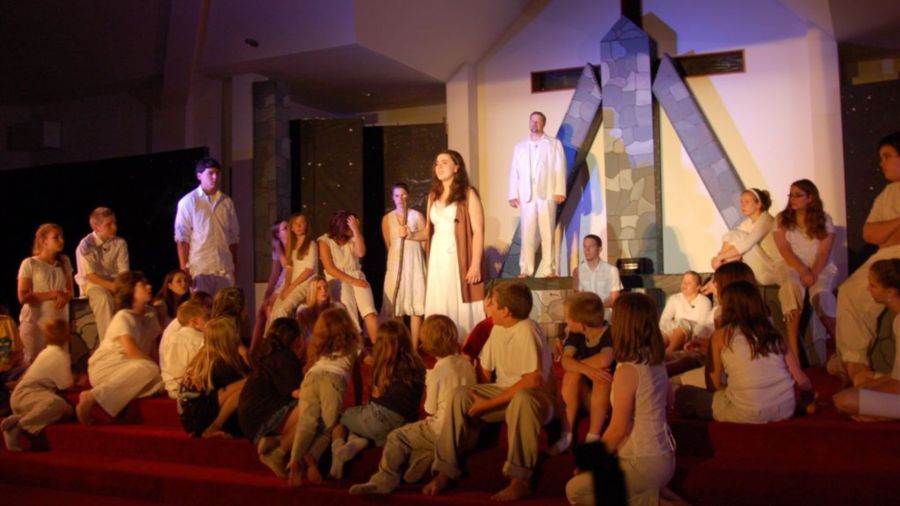
Children of Eden was one of the first shows that we produced at Sterling UMC (back in 2007). In those days we had such limited theatrical resources that I would frequently pick a few key scenes that had to look exactly right and build the design for the rest of the show based on having things in place for those moments.

This was one of those scenes. Noah is on the deck of the arc, calling out to God in the darkness. It paints a major contrast to the colors of creation in Act 1 or the parade of animals boarding the arc a few scenes before. He’s defeated, he’s scared, and he has no idea what God wants him to do.  He feels abandoned, though God is with him in ways he can’t understand.

For all of the liberties that the script takes, the emotion of this moment is exactly right. For Noah, for many heroes in the Bible, for you and for me.

For as long as humans have walked on God’s Earth, we have longed to hear his voice. We have sought the guidance of any force that seems to be of God; pieced together the wind and the weather, searched the stars for breadcrumbs leading back to the divine. We’ve gotten it wrong at least as many times as we’ve gotten it right.

Probably more.

A prophet is defined as someone who declares a message that they believe has come from God. The true prophets have inspired hope, justice and mercy; they have validated the Gospel and changed the world.

Unfortunately, anyone and anything can claim to bear a message and speak on behalf of the Lord. The Bible warns over and over and over again about false prophets and how easy it is to be led astray. After all, when you are scared and alone the voices of the world will be the loudest and the easiest to hear.

But do not be discouraged.  The Spirit of God is living in you.

The prophet Joel proclaimed that a day was coming when God’s Spirit would be poured out on all people and, on Pentecost, that prophecy came into focus. The age of the Spirit had come: Jesus provided us salvation and gave his followers new life in the Spirit.

If no outer force will show you your course, you’ll have to look inside
Your only illumination, the spark of creation 

You have been anointed by the Spirit to hear his voice.  Because of Jesus, you are the prophet you seek.


This post was originally published as a part of a lent devotional my church, Sterling United Methodist, is writing. Check out this and other posts on the church blog!

Console

What is the worst thing you’ve been told in the earliest stages of grief?

Whether you lost a loved one, a career, or a dream; chances are that some very well-meaning person has said the exact wrong thing.

“They are in a better place!”

“God won’t give you more than you can handle!”

“God must have known that they would need a special​ mom like you!”

They are intended as offerings of kindness and validation but often land like salt in an open wound.  We’ve all lovingly offered, and received, these mostly unhelpful gifts.

The scripture that inspired this week’s prompts is John 11:1-45: the miracle of Jesus raising Lazarus from the dead, a story unique to the Gospel of John.  In it we find the shortest verse in all of the Gospels (and in the entire English translation of the Bible):

Jesus Wept.  (John 11:35)

He wept.  But…Jesus knows he is going to raise Lazarus.  Why is he crying?

There is something about the time that passes between a person’s death and the arrival of the clergy that is difficult to describe.   People start to gather and basic logistics start to form.  In this liminal space you can still remark about the weather, someone’s new blouse, or poke around at some snacks.  But once the Pastor arrives, the gates open.  That grief, momentarily deferred to allow for reinforcement (or maybe an 11th hour miracle), crashes down.  A new reality has come.

This isn’t a time for platitudes.  This is a time for comfort, for empathy and compassion.  And, if it isn’t a time for words at all, it might be a time for weeping.

Mary, Martha and their friends are waiting for Jesus; they know that whatever comes next, he is the gatekeeper.  They are full of questions, as we are when we lose that which we love.  They know that Lazarus will rise again “at the resurrection on the last day” but why did he have to die here and now?  Couldn’t something have been done?  We called on you, Lord.  Where have you been?

They didn’t receive an answer, at least not one that they could understand.  But they saw Jesus weeping and saw how he had loved Lazarus.  They saw how he grieved with them.

Because Jesus knows he is going to raise Lazarus – he absolutely knows.  But we can believe in the ultimate ending, and still cry for how it has to be.

I have seen hearts change for Christ because of how a body of believers responded and consoled them after the loss of a loved one.   I have heard powerful testimonies about how families survived a catastrophic loss of resources because of how a church carried them through the crisis.

The Lord never promised us a life without hardship, but the presence of God and of each other is the reward of a persistent faith.  We weep together. We show up and walk through the darkness together.  We never forget the first responders of love, and their consolation is what turns our test into a testimony of grace.


This post was originally published as a part of a lent devotional my church, Sterling United Methodist, is writing. Check out this and other posts on the church blog!
Opened

When my son was little, doors were everything.

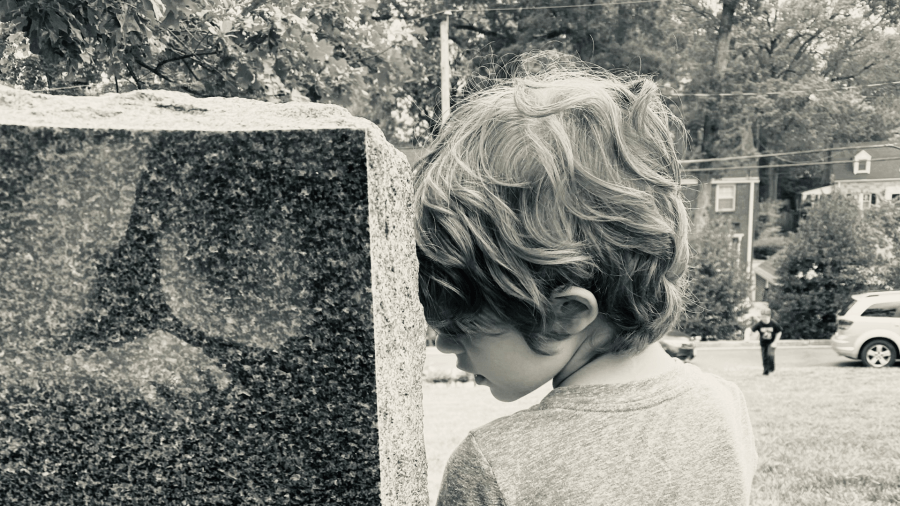
Before there were words – before there were songs, before “I love you”, and “ee-i-ee-i-oh”: there were doors.  His love was not discriminating; he loved the doors at Target, the doors to the closets at church and the doors he constructed himself with legos, cards, books or even his own hands.  Anything similar enough to trigger his imagination would do.

If you have known us for a long time you have surely encountered some of Danny’s doors.  If he trusted you enough, you might have even played the game a few times!  It was repetitive – more like a ritual or a ceremony – and it was a lot of fun, if only because it was endlessly delightful to my boy.  The game was complex and methodical in his mind but we understood the only rule that mattered:  only Danny opens the door.

Things became more complicated as he assembled his language skills, but the basics were always the same.  Our job was to knock; he would decide to let us in.

The game evolved into a coping mechanism for Danny as he grew older.  When the world threw unpredictable things at him, he would retreat to the stability of his doors to keep his cool.  Unfortunately, he was far more reluctant to open the door for the world than he had been in his earlier games.   That meant that, though he often seemed like he was present, he was really just peeking through the cracks from the other side of his mind.  He didn’t trust the world, so he was – for all intents and purposes – closed.

I don’t need to tell you that is a difficult way to live.  We wanted his life to be an exchange of hope and possibility, not a cage of his coping.  So we knocked, and we prayed.

“Behold, I stand at the door and knock. If anyone hears my voice and opens the door, I will come in…”  Revelation 3:20

Danny’s doors were uniquely his, but the process of working with him to find the key was a spiritual practice for me.  I spent several seasons out on his doorstep, knowing he was looking for me in a place where he had not yet allowed me to go.  I was certain that he was as desperate to know that I was there as I was for an invitation in.  But no matter how much I loved him – no matter how much I ached to comfort him, to know him, to help him:  only Danny opens the door.

And goodness, doesn’t that sound familiar?  Isn’t that how we respond to Jesus sometimes?  We feel isolated, abandoned or ignored but we haven’t done the thing he cant do for us.  We need to open the door.  

If you are feeling closed this season;  if you are feeling alone and unknowable, trapped behind something that once served to keep you safe…consider this your invitation to press your ear to that door and listen.  Love is knocking, right on the other side.

Be opened.  


This post was originally published as a part of a lent devotional my church, Sterling United Methodist, is writing. Check out this and other posts on the church blog!

Harvest

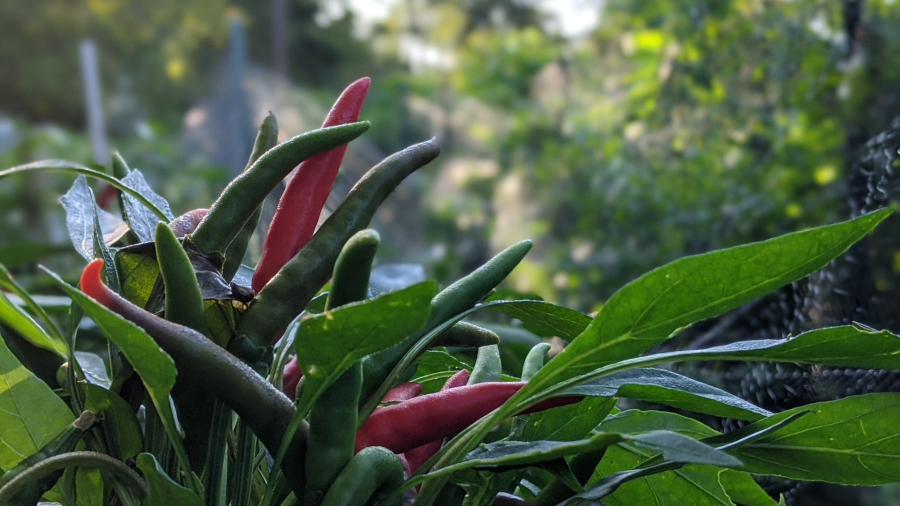
The cycle begins with strategic planning.

As you determine what crop to grow, one might consider many factors: climate, cost, appetite or even sale potential.

The agricultural cycle moves forward with soil preparation, followed by planting.  Planting is followed by consistent attention and care during the growth season.

Finally, growth is followed by harvesting.

Prepare, Plant, Protect, and Harvest.   So goes the cycle of agriculture; so goes the cycle of life.

I think it is interesting, though, how we readily accept this process as a circle when we apply it to our gardens but so often perceive it as a line when we apply it to our lives.

We know that we need to plant the seeds of this season’s harvest for the soil to bear fruit again.  We know that the harvest is not the end of the story when it comes to flowers, or vegetables.

But in our lives the process can feel more terminal.  After we have carefully chosen to plant what we would desire to reap – after we have so tenderly protected our investments as they’ve grown – isn’t it so tempting to harvest our reward and be done with it?

The concept of harvest is all over the Bible; from literal talk of the riches of the earth to metaphors meant to explain the labor and rewards of our faith.  But I wonder if the most significant message of harvest might be as simple as, “keep going”.

We are not created to live in perpetual harvest.  Harvest is an action, not a destination. It is essential to the fruit you will go on to bear in another season, even if along the way you determine that you need to change the crop.

What are we called to do with what we have sown?   I think that is a question we are called to ask many times in our lives.  The good news is that our God is ready with the answer:

Plant new flowers.

Don’t just grow; grow forward.


This post was originally published as a part of a lent devotional my church, Sterling United Methodist, is writing. Check out this and other posts on the church blog!