Breath

A year ago, this word would have meant something else to me entirely.

I don’t know that a year has passed where we have considered more the idea of taking a breath; I don’t know that I have ever thought more about the air passing in and out of my lungs.

A year ago the only face masks that I owned were the remnants of a box purchased when I came down with bronchitis the week of Danny’s birthday the year before (and I didn’t want to pass on my germs). I remember carving the complicated Mario fruit structures in a mask and gloves and thinking “wow, this is miserable. I’m glad I don’t have to do this for very long.”

What a humbling year.

As breathing is a reflex that is controlled by the brainstem, if you have never had cause to examine it, you probably don’t think too much about it. We can discipline our lungs like athletes or performers. We can supplement our oxygen when we are ill. We talk metaphorically about something “taking our breath away” to emphasize it’s significance but if you have ever reached for a breath you couldn’t quite grasp, you know there isn’t a lot of poetry in that reality.

Because truly, to run out of air is to perish.

I think this is why hope is compared to air so often. I have heard it said that hope is to the soul what air is to the lungs, and I think that is probably pretty accurate. The soul is designed for hope; our hearts and minds cling to it in order to overcome what is treacherous in our lives.

Gasping for hope is a suffocation of its own.

In the last year I have heard a lot of people complain that they can’t breathe while wearing the face coverings required to do most activities in this pandemic season. It isn’t my favorite accessory by any means, but I find that I do ok getting enough air so long as I don’t exert myself too much. I breathe just fine, but I have trouble trying to catch my breath. It is too much at once and often when I meet the resistance on the inhale, I panic; I end up needing to find a place where I can be alone to lower my mask and get a few deep breaths to recover.

If I am to consider hope the same way, then I need to be very mindful of the hope I exhale. I have to pace myself, knowing that while the end is in sight, the race is still being run.

And should I find that I have overexerted myself, in order to rescue my soul, I need to find a place where I can think clearly and pray earnestly, lower my doubts and fears, and hope courageously to begin to recover.
Water

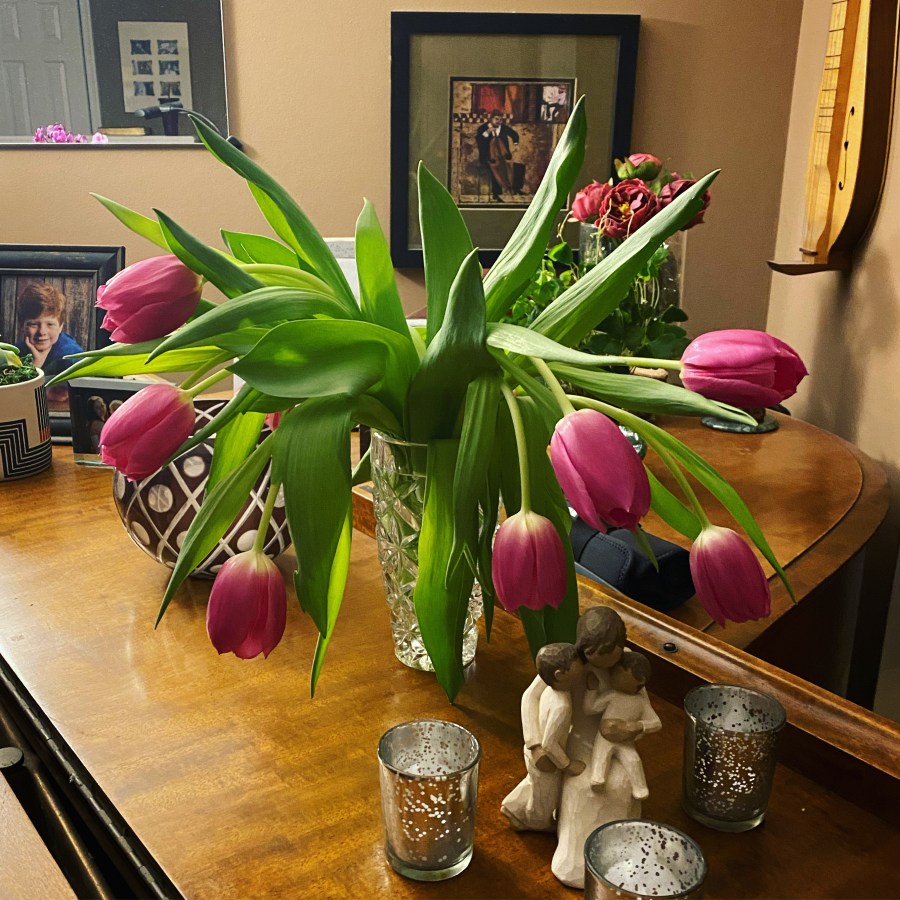
This evening as we were preparing for choir practice (from the living room) I looked at the piano and noticed that the tulips I had in a vase were no longer standing straight. In fact, they were completely droopy. I went over to check out the situation and sure enough, the vase was completely dry – even though I had filled it the night before.

I thought my work was done when it came to those blooms for at least a day or two; it never occurred to me that they would require more water within 24 hours. If the flowers hadn’t wilted the way they had, I would not have even checked on them yet.

It was a potent reminder that we do not always use our resources in the same way, at the same pace.

Somedays you may need more water to stay hydrated, more food to feel full, or more sun to be happy. Our bodies and minds have a pretty good way of letting us know when we are running low on these things, if we listen.

But there are other things we can easily run out of – patience, love, mercy. Often we are are a cranky, miserable mess before we even realize we have run bone dry. It is easy to think of our souls the same way I thought of that vase – I just filled that yesterday. I can’t possibly need more already.

Fortunately, there is a well that will never run dry where we can draw endless amounts of Grace. It is ready before we ask; poured out to us without cost or condition. All we need to do is accept is that we need it.

Survive

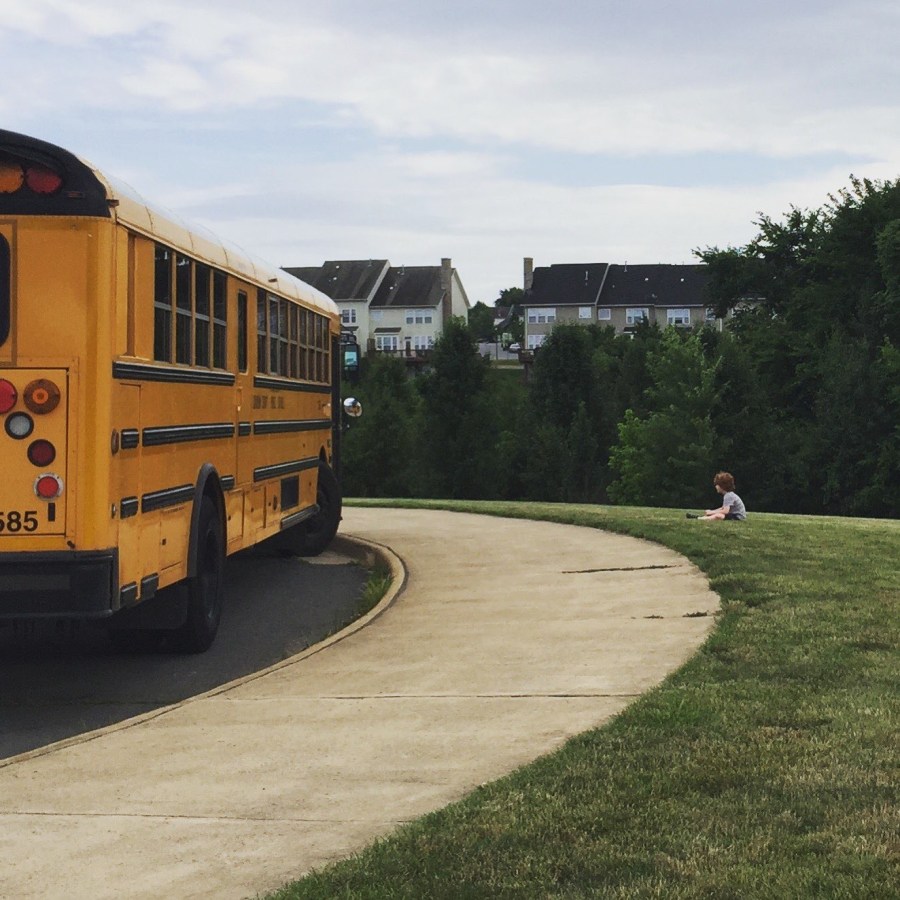
The image above was taken in the Summer of 2015, a few months after Ezra was born. It was a lot of change for Danny, and he found a lot of peace sitting where the busses were parked at the school, memorizing every inch of them.

Today we found out that Danny is no longer eligible for transportation services through the school system, due entirely to the complicated circumstances that have landed him where and when he is now. It is no one’s fault; we got lucky for many years that the bus came dutifully every morning and afternoon and, though I thought we might have figured it out for another year at least, it all came to a definitive end this morning.

Danny doesn’t know yet. And if you know anything about our lives, then you probably know why we have been struggling to figure out how to tell him. I have delivered many pieces of life changing information to this kid, but I am not sure any of them have had the kind of impact that this will. He can tell you the make and model of every bus there is. He watches videos of bus safety and creates Roblox worlds full of bus stops and schools. He designs routes in his head as we drive; he has even been known to improve the efficiency of the route his own bus is traveling.

At his best, the bus was a reliable treat rounding out his day. At his worst, the bus was the only reason he went to school at all.

As I was talking it over with his extremely apologetic case manager this morning (who has no role in this beyond bearing the bad news), I said, unconvincingly: “I think it will be ok eventually. He’ll survive.”

She shifted her gaze past me into the backdrop of his bedroom, with his bus panel and traffic light and shelves of die cast busses and said: “Are you sure?” It wasn’t a joke. For Danny, this is a big, big deal.

But I stand by my initial instinct: he will survive. If we think on our lives honestly, there are probably many things we can’t imagine losing. We pin hopes for our survival on a lot of things; a job, a car, a phone, a church. And in many cases we truly DO need these things to survive. And sometimes what seems insignificant to one person would be an absolute catastrophe in the life of someone else.

Sometimes we lose something essential that isn’t a thing at all.

We may pray and beg and bargain with God and plead our case to anyone who will listen, but here on this Earth we are fragile beings who love fragile things. And loss is inevitable.

For people of faith, especially, it is hard to not take it personally when we have prayed hard for something that withered on the vine. It is devastating to feel like you went to your most sacred place to earnestly plead for what you believe you can not live without, just to find yourself staring down the very reality you most feared.

But the Lord never promised us a life without hardship; the reward for a persistent faith is not a life without loss.

The reward – for making Him a part of your life and a part of your day and a part of your thoughts – is His presence. And however large or small the loss, He will be present with you in all of the days of your grief. He will walk with you as you rebuild and find new pillars of strength. And He will rejoice with you when you realize one day that the bus stopped coming…and you survived after all.

Flame

What is the difference between a fire and a flame?

When I think about a fire I immediately think of something destructive. In my mind I see a charred and broken landscape, a force of nature that we can just barely hope to contain.

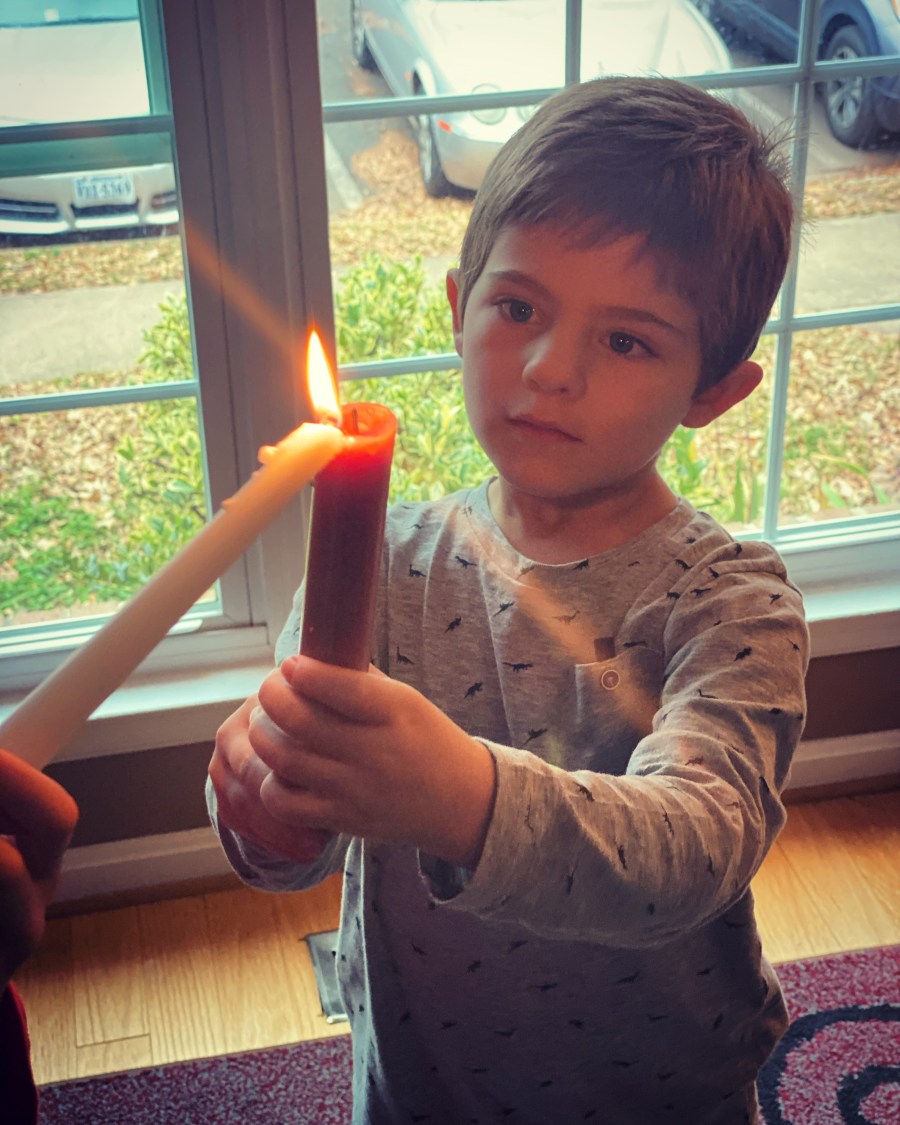
But a flame? Well, we see a flame as something positive, maybe even hopeful. We carry a torch for someone we love, we light candles in ceremony and in serenity. We use the metaphor of an eternal flame to signify the miracle of never ending love.

I have candles all over my house – the light of small flickering flames is my happiest place and I have put my home together such that I never have to work hard to fill a room with candle light. However – I am careful not to ignore the warnings that come affixed to most of the candles that I buy that instruct me how to burn that particular item with the least chance of setting fire to my house or something in it. One warning that is always present is to never burn the candle unattended; it can throw a spark and spread through your room like a wildfire. There is a lot of power in that one tiny flame.

That is why we use it so often to signify the love of Christ – why at Christmas we pass candle light between us in a darkened sanctuary and the glow lights up the room. This what we want to see the Love of our Lord do in this world; this is how we want to make disciples and share the good news of Salvation. And in the best situations, you would be able to ignite a flame that spreads the light far beyond your ability to attend its burning.

But I think that it bears warning that a lot of our passions can spark a flame that is easy to pass on. And if we aren’t careful, we could start or enable a destructive fire that could lay waste to our communities and our relationships.

So when it comes to flames, be discerning about what ignites you. Be intentional about what you want to spread.